Lightly edited transcript of the video – filler words and repetitions have been removed.
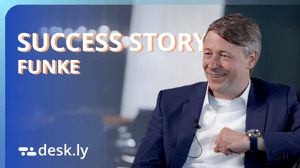
Felix Mohr (Co-founder of desk.ly): Today we're at our client, FUNKE Media Group, and together we're looking at how desk.ly supported them in their transformation process into the hybrid world of work. Heimo, what does FUNKE Media Group do?
Heimo Krum (Chief Information Officer): FUNKE Media Group is a media company. We have three business areas that we serve. Our roots lie in the field of regional media. What happened with us is what many other companies have done too: We said, okay, we have to adapt to a hybrid world of work. It was clear that just working from home doesn't work at all. We then also introduced a rule that says you should generally be at the office location for three days.
Leonard Wittig (HR Business Partner): The hybrid world of work is now state of the art, particularly in everyday office life, and it is actively promoted and lived here at FUNKE.
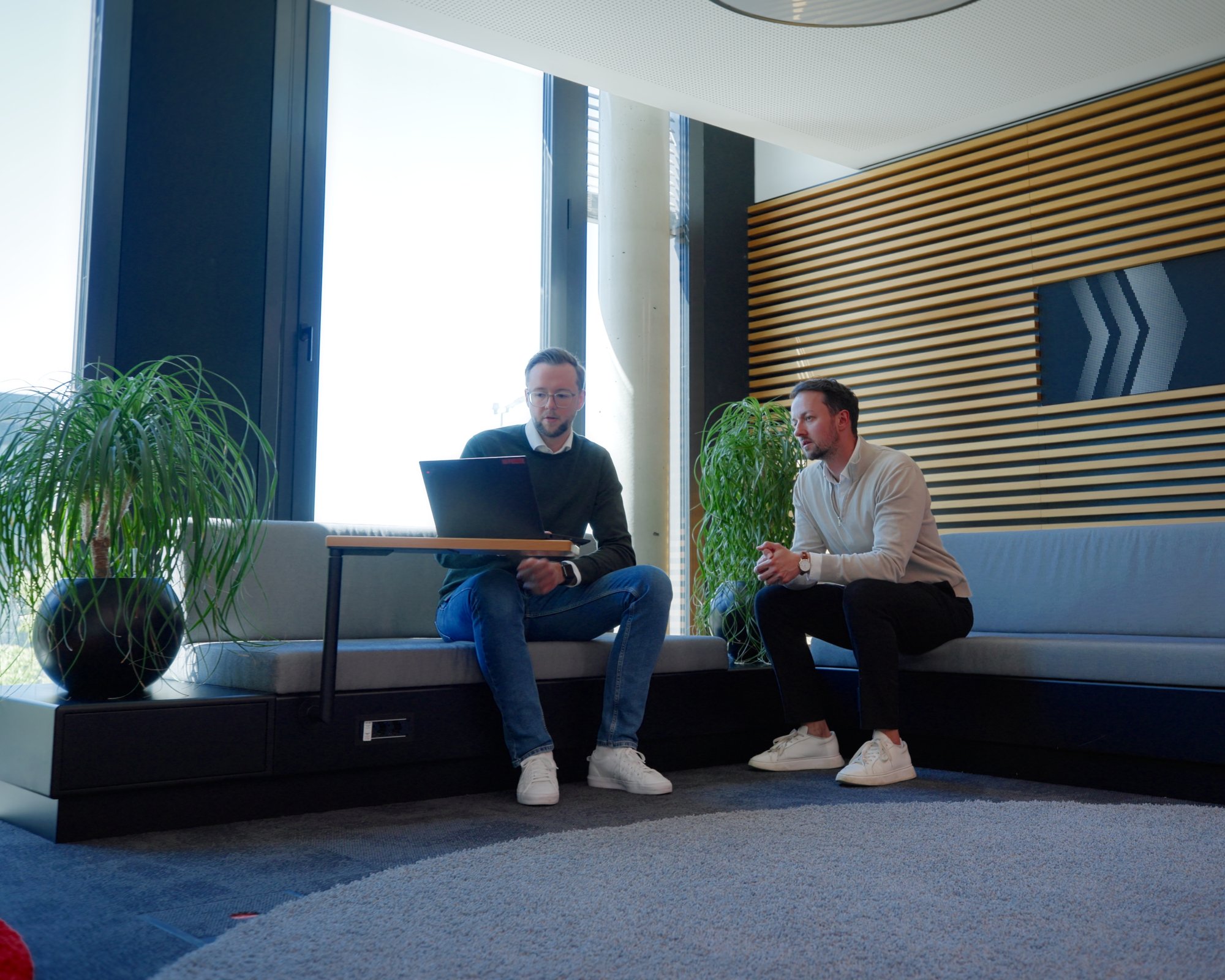
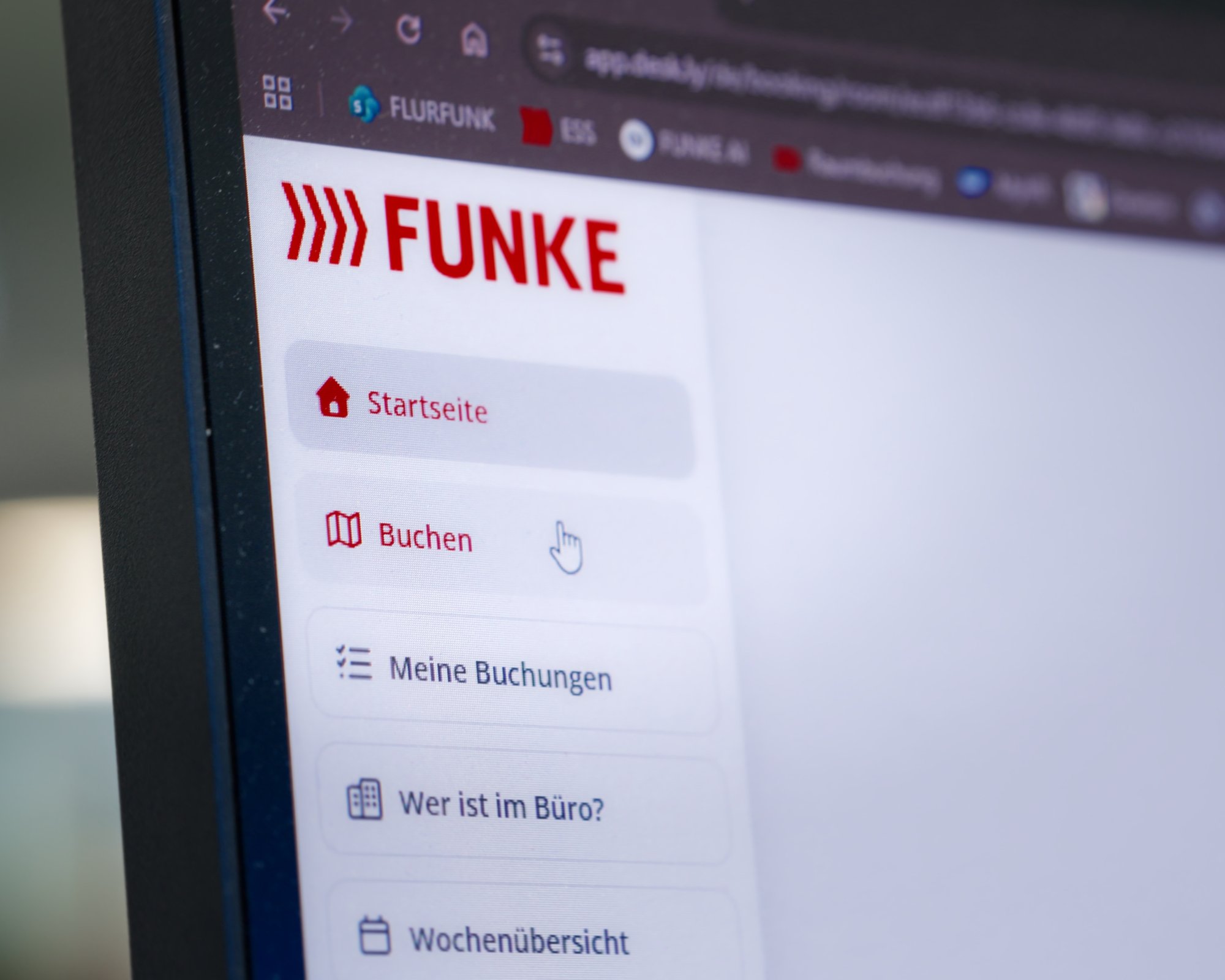
Heimo Krum: We also want to have a presence in the office, and at the same time, we started to look at whether we could use space better or differently, whether we could consolidate, and we also started subletting and merging spaces. What was new was actually the challenge: How do I book workstations? Because if I don't have my own, I have to book it. And I don't even know who is in the office when, how or where.
That's why the first step was that we established it as a solution only for ourselves. But others started noticing it and word got around, so that very quickly other departments and companies came around the corner and said: Don't you have a solution? Or: You use this desk.ly, can't we use that too?
And honestly, those are the best, most successful implementation projects – when you purchase new software and have such good use cases where people say: Hey, that's cool and really practical, and others say: Hey, I'd actually like to have that too. The topic of Made in Germany was very important to me, regardless of the fact that it's also always a matter of trust. I think software decisions are always a matter of trust.
You always decide on a piece of software, but also on the people behind it. We have many, many works council committees that we have to involve in co-determination, and we do involve them. It was very important to us to have good answers to their questions.
And that is, of course, a huge asset: to have a software partner who listens and who also enables you to help shape things if need be, or, on the other hand, also brings in their own good ideas where you say: Hey, that fits us.
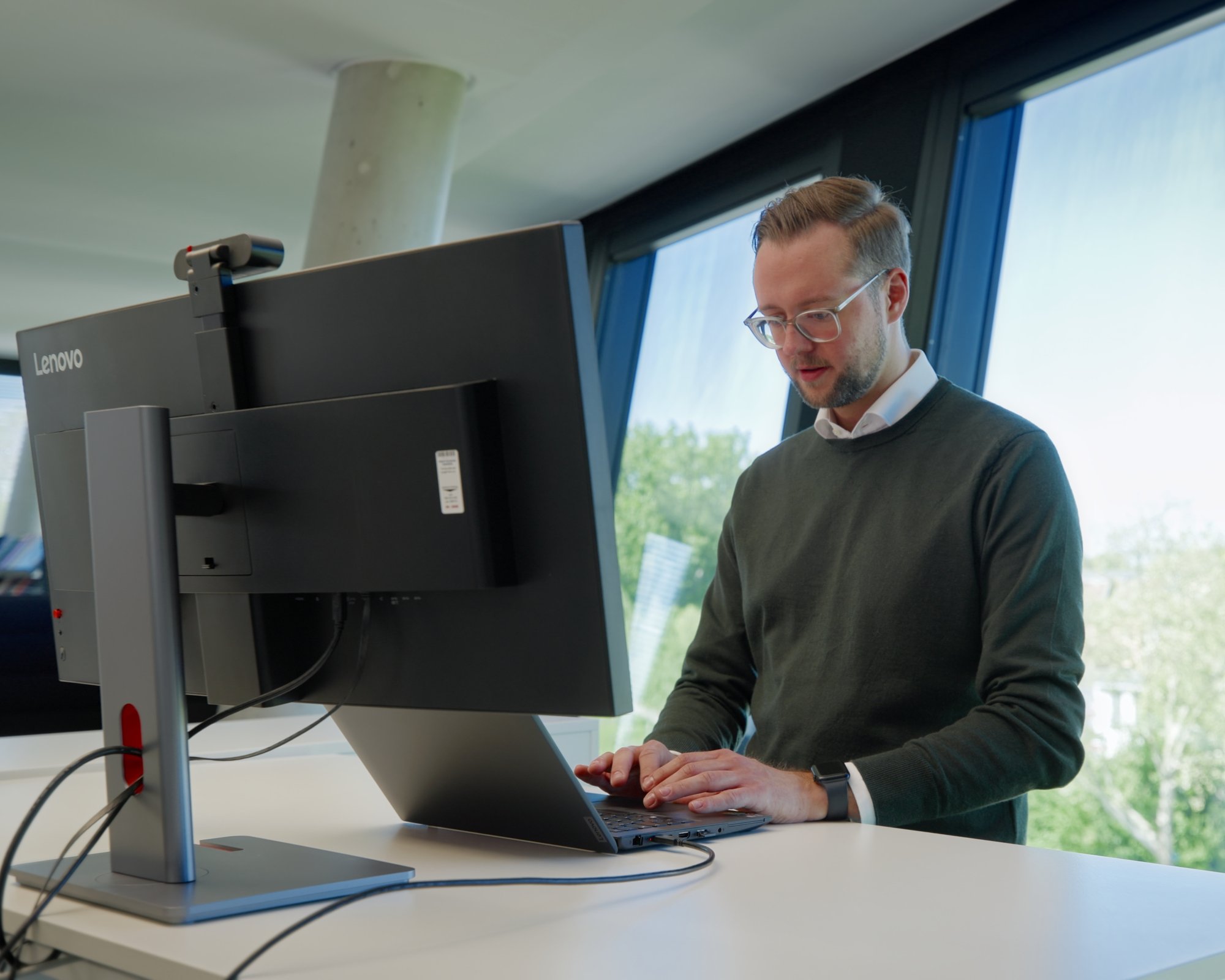
Leonard Wittig: When I started at FUNKE, desk.ly was already established and was already being used by everyone. And I didn't perceive it as a bothersome instrument, but rather as a cool tool that is just totally intuitive.
Heimo Krum: It's a tool that I rarely or never talk about, which is actually a good sign, because usually the things that land with me are the ones that don't work, where people are dissatisfied. And I think it's just accepted. desk.ly is simply a part of the software tools and mechanisms that we offer to break down barriers, and that naturally strengthens our role as a value driver for FUNKE.
Leonard Wittig: The fundamental driving force of the modern way of working also lies, I believe, in working interactively with other areas. And the shared tool that was introduced and then established itself in various stages now simply makes it possible to act much more flexibly. It also enables the teams to establish their own organizational structures and to agree on when a team day might take place.
desk.ly has certainly played a significant role in making the floor plan clearer and more transparent. We have already pre-assigned some fixed workstations that have particular requirements – whether it's for accessibility or perhaps because the job places a specific technical requirement on the workstation.
Heimo Krum: We're now finding that this assumption about how many people are implementing this 3:2 rule isn't accurate at all. But I believe that, especially with such questions, it can actually help to not rely on an average assumption for future decisions, but rather to know based on data: Okay, what's the actual situation there? To have a better, data-based sense and a basis for argumentation, and to be able to reach the right decisions in discussions.